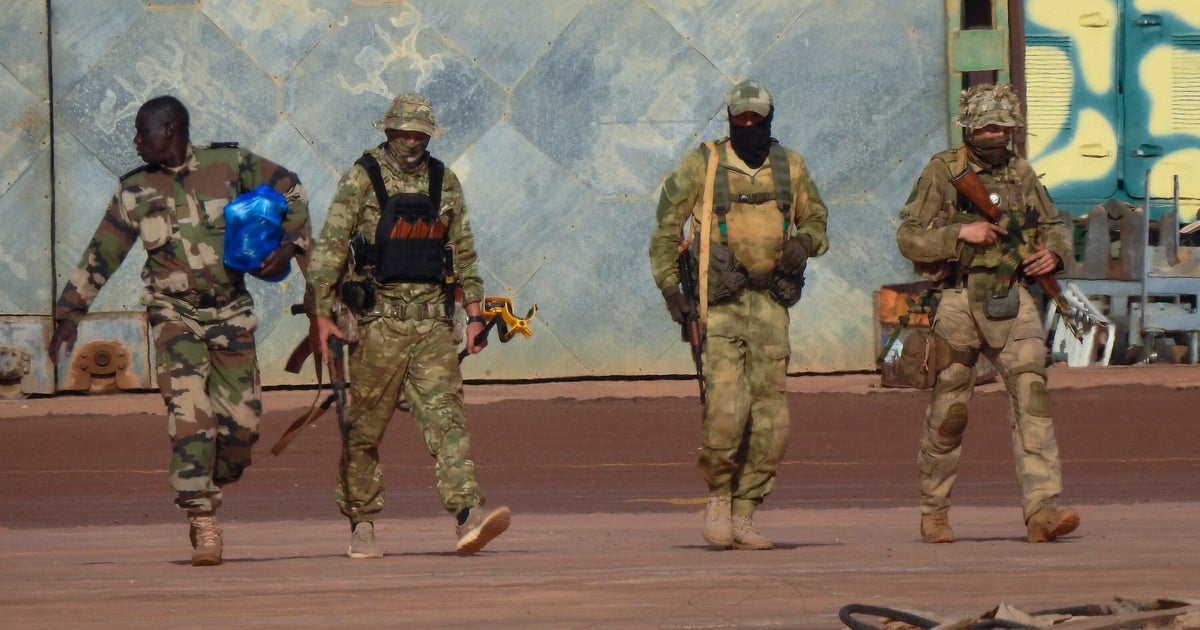
Mali’s northern city of Kidal has long been a flashpoint for conflict — a rugged desert stronghold where Tuareg rebels, Islamist militants, and foreign forces have clashed for over a decade. But recent attacks in the region have triggered a sudden shift: Russia’s Africa Corps has confirmed its withdrawal from Kidal, marking a strategic retreat amid deteriorating security and mounting resistance.
This move is not just logistical. It signals a recalibration of Russia’s presence in the Sahel, one that reflects both battlefield realities and deeper geopolitical currents. The Africa Corps, widely seen as a successor to the Wagner Group’s operations in Africa, had positioned itself as a key security partner to Mali’s military junta. Their departure from Kidal following coordinated attacks raises urgent questions about Russia’s long-term ambitions in the region and the viability of its proxy warfare model.
Why Kidal Matters in the Sahel Conflict
Kidal sits in northeastern Mali, an isolated, arid region bordered by Algeria and Niger. Its geographic remoteness is matched by its political complexity. Since Mali’s 2012 crisis, Kidal has been a symbolic center of Tuareg separatist movements, particularly the Coordination of Azawad Movements (CMA). The city’s population, largely Tuareg and Arab, has resisted control from Bamako for years.
Control over Kidal means control over a critical axis of the Sahel — a corridor used for smuggling, militant movement, and foreign military deployments. When Russia’s Africa Corps entered the fray, it did so under the guise of stabilizing Mali’s north. But its presence in Kidal was always fraught. The local population viewed foreign troops with suspicion, especially those aligned with Mali’s junta, which has clashed repeatedly with the CMA.
The recent Mali attacks that precipitated Russia’s withdrawal were not isolated incidents. They were part of a broader pattern: insurgent groups, including elements affiliated with Jama’at Nusrat al-Islam wal-Muslimin (JNIM) and the Islamic State in the Greater Sahara (ISGS), have increased their presence and attacks in the region since early 2023. IEDs, ambushes, and drone strikes have become routine.
One such attack, a coordinated assault on a joint Malian-Russian base near Tinzaouaten just miles from the Algerian border, killed at least 14 soldiers and reportedly damaged Africa Corps equipment. Satellite imagery later showed signs of hasty dismantling — burned vehicles, abandoned camps, and scorched supply depots.
How the Africa Corps’ Role Has Evolved in Mali
Russia’s footprint in Mali didn’t begin with the Africa Corps. It started with the Wagner Group, a private military company (PMC) that deployed hundreds of mercenaries starting in 2019. Wagner offered Mali’s military rulers counterinsurgency support, protection, and intelligence — all while securing mining concessions in return.
But after the death of Wagner leader Yevgeny Prigozhin in 2023, the Kremlin restructured its African operations. Enter the Africa Corps — a more formalized, state-aligned force under Russian military oversight. While still operating through opaque channels, the Africa Corps presented itself as a more sustainable, disciplined alternative to Wagner.
Its mission: assist Mali’s armed forces in reclaiming territory from jihadist groups while projecting Russian influence in West Africa. By late 2023, Africa Corps units were active in Gao, Ménaka, and Kidal — often operating from airfields and forward operating bases.

Yet, in Kidal, the Corps faced unique challenges: - Lack of local intelligence networks – Unlike Wagner, which relied on informal alliances with tribal leaders, the Africa Corps struggled to build trust with local communities. - Mobility limitations – The vast desert terrain requires light, mobile units. Africa Corps operations were often slow, heavily armored, and vulnerable to ambush. - Political sensitivities – The Malian junta’s heavy-handed tactics fueled resentment. Russia’s association with these operations tarnished its image.
The Mali attacks in early 2024 exposed these weaknesses. In one case, a convoy en route to reinforce Kidal was hit by a VBIED (vehicle-borne IED), killing several contractors. Communications were disrupted, air support delayed. The Africa Corps, despite its reputation for brutality and resilience, failed to respond effectively.
The Strategic Implications of Russia’s Retreat
Russia’s withdrawal from Kidal is not just a tactical setback — it’s a geopolitical recalibration.
For the Malian junta, the departure creates a power vacuum. Russian forces had been instrumental in holding key towns and training elite units. Without them, the army may struggle to maintain control, especially as jihadist groups intensify operations.
But there’s another layer: the signal this sends to other African nations.
Russia has positioned itself as an alternative to Western powers, offering military support without democratic strings attached. Its presence in Mali, the Central African Republic, and Sudan was meant to showcase this model. Now, a visible retreat from Kidal could undermine that narrative.
Analysts also point to internal Russian constraints. Moscow is stretched thin in Ukraine. While Africa remains a strategic priority, resources are limited. The Africa Corps may be refocusing on higher-value locations — such as Ménaka or the tri-border zone with Burkina Faso and Niger — where jihadist activity is more intense and geopolitical leverage greater.
Moreover, the withdrawal may reflect a shift in how Russia operates in Africa. Instead of direct combat deployments, it may rely more on: - Remote drone operations - Intelligence sharing - Training programs through state-run entities
This “light footprint” approach reduces risk while maintaining influence.
Local Reactions: From Distrust to Cautious Relief
In Kidal, the Africa Corps’ departure has been met with mixed reactions.
Some residents, particularly those aligned with the CMA, welcome the exit. “They came as allies of the junta, not as peacekeepers,” said a local community leader who spoke on condition of anonymity. “Their checkpoints were places of abuse. Their convoys brought fear, not security.”
Others worry about what comes next. With Russian forces gone, the Malian army may launch punitive operations against suspected rebel sympathizers. There’s also concern that jihadist groups could move in, exploiting the instability.
Human rights groups have documented abuses by both Malian forces and their Russian allies. In Tinzaouaten, witnesses reported looting and extrajudicial killings during Africa Corps operations. The withdrawal doesn’t erase that legacy — it just shifts the balance of power.
Still, there’s a sense that local dynamics are reasserting themselves. The CMA has reoccupied parts of northern Kidal, raising their flag over abandoned military posts. Whether this leads to renewed negotiations with Bamako or another cycle of violence remains unclear.

What This Means for Regional Security The Sahel is at a crossroads.
Mali’s partnership with Russia was meant to stabilize the country. Instead, it has deepened fragmentation. The Africa Corps’ withdrawal from Kidal underscores a broader trend: foreign military interventions, especially those lacking local legitimacy, often fail to deliver lasting security.
France, which withdrew its forces from Mali in 2022 after nine years, serves as a cautionary tale. Despite billions in spending and thousands of troops, jihadist groups only grew stronger. Russia’s model — based on coercion, mineral deals, and elite protection — appears to be following a similar trajectory.
Regional actors are watching closely. Niger and Burkina Faso, both under military rule and increasingly aligned with Russia, may reassess their own security partnerships. If the Africa Corps can’t hold Kidal, can it hold anything?
ECOWAS and the African Union face tough choices. Sanctions and diplomatic pressure have done little to shift Mali’s trajectory. Meanwhile, the humanitarian crisis worsens — over 5 million people in Mali need aid, and displacement is rising.
The vacuum left by Russia’s retreat could be filled by non-state actors: jihadists, smugglers, or even new foreign powers. Turkey, for instance, has expanded drone sales across Africa. Iran and China are also increasing their footprint.
Lessons from the Ground: What Works — and What Doesn’t
The failure of the Africa Corps in Kidal offers practical lessons for future security efforts in the Sahel:
- Local legitimacy matters more than firepower – No amount of armored vehicles or air support can compensate for a lack of community trust.
- Adaptability beats doctrine – Mobile, lightly armed units with strong intelligence networks outperform rigid, conventional-style deployments.
- Short-term gains often backfire – Quick territorial gains, especially when achieved through repression, fuel long-term resistance.
- Resource extraction undermines credibility – When security partnerships are tied to mining or energy deals, they’re seen as exploitative, not protective.
One example stands out: the experience of MINUSMA, the UN mission in Mali. Despite its flaws, MINUSMA invested in community dialogue, early warning systems, and local mediation. Its withdrawal in 2023 left a void — but not because it failed militarily. It failed because it lacked political support from Bamako.
Future efforts must blend security with governance. Disarming militants means nothing if there’s no justice, no jobs, and no political inclusion.
The Road Ahead: What to Watch
Russia’s Africa Corps may be gone from Kidal, but its broader mission in Mali continues. The key questions now are:
- Will the Corps redeploy to more defensible or strategically vital areas?
- Can the Malian army hold territory without foreign combat support?
- Will the CMA use this moment to push for renewed negotiations — or renewed conflict?
- How will jihadist groups exploit the shift?
Satellite monitoring, open-source intelligence, and local reporting will be critical in tracking developments. So too will diplomatic engagement. The AU, UN, and regional bodies must avoid repeating past mistakes — imposing solutions from the outside without grounding in local realities.
For now, Kidal remains a symbol: of resistance, of fragility, and of the limits of foreign military power.
The Africa Corps’ withdrawal isn’t the end of Russia’s Sahel ambitions. It’s a pivot — one that reflects both the brutality of the conflict and the difficulty of winning it.
What mistakes should you avoid? Avoid generic choices, weak validation, and decisions based only on marketing claims.
What is the next best step? Shortlist the most relevant options, validate them quickly, and refine from real-world results.